
You can now simulate windshield defog and fogging scenarios, refine fluid meshes where they matter most, and run two-way transient coupling with system models without transient restarts. The ThermoAnalytics 2026.2 release of TAITherm, MuSES, and CoTherm brings moisture transport to RapidFlow, faster and more flexible meshing, and a new CoSolver mode to CoTherm for coupled workflows.
TAITherm 2026.2 brings moisture transport to RapidFlow, so you can simulate windshield defog and fogging scenarios and add local humidity to human thermal comfort predictions. Multi-level meshing and a new results format also make high-resolution fluid models dramatically faster to run.
Moisture and Human Comfort
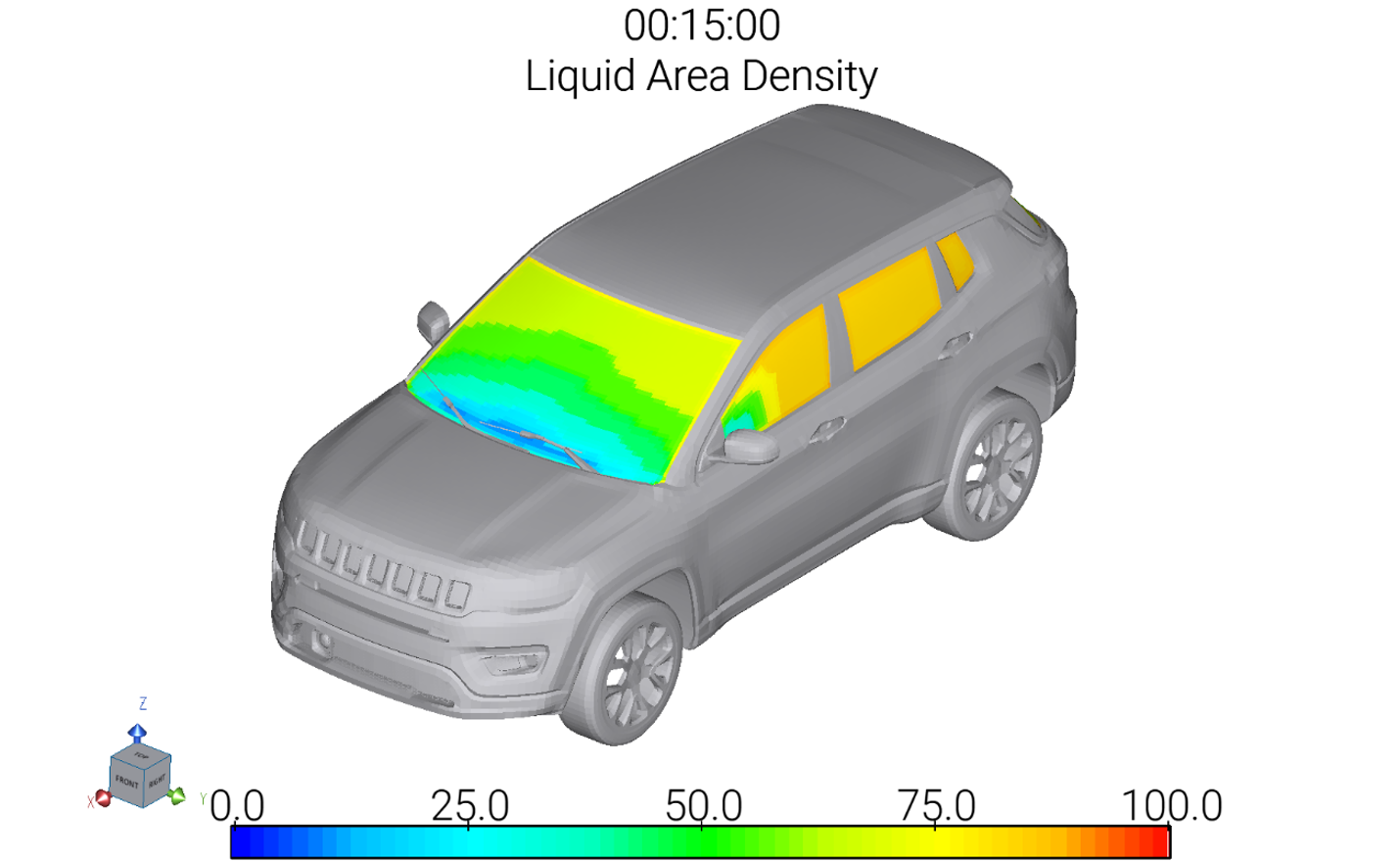
- Moisture and humidity tracking in RapidFlow. RapidFlow now tracks moisture and humidity in the fluid domain and couples them with surfaces in the thermal model through evaporation and condensation. You can simulate windshield defog and fogging, model condensation and drying on cabin electronics, study moisture effects on vehicle sensors, and account for local humidity in human thermal comfort predictions. Inlet boundaries specify moisture as relative humidity, and curves or input parameters can drive transient conditions.
- Evaporation and condensation displays. New graphical display modes show Mass Transfer Coefficient, Ambient Humidity Ratio, and Ambient Relative Humidity. Checking moisture boundary conditions now takes a glance at the graphics window.
- Respiration heat and moisture outputs. Output parameters now report Q Respiration and Respiration Mass Flow Rate, capturing the heat and moisture mass transfer from human respiration. You can couple these values into 1D and system models for energy management studies.
RapidFlow Meshing and Performance
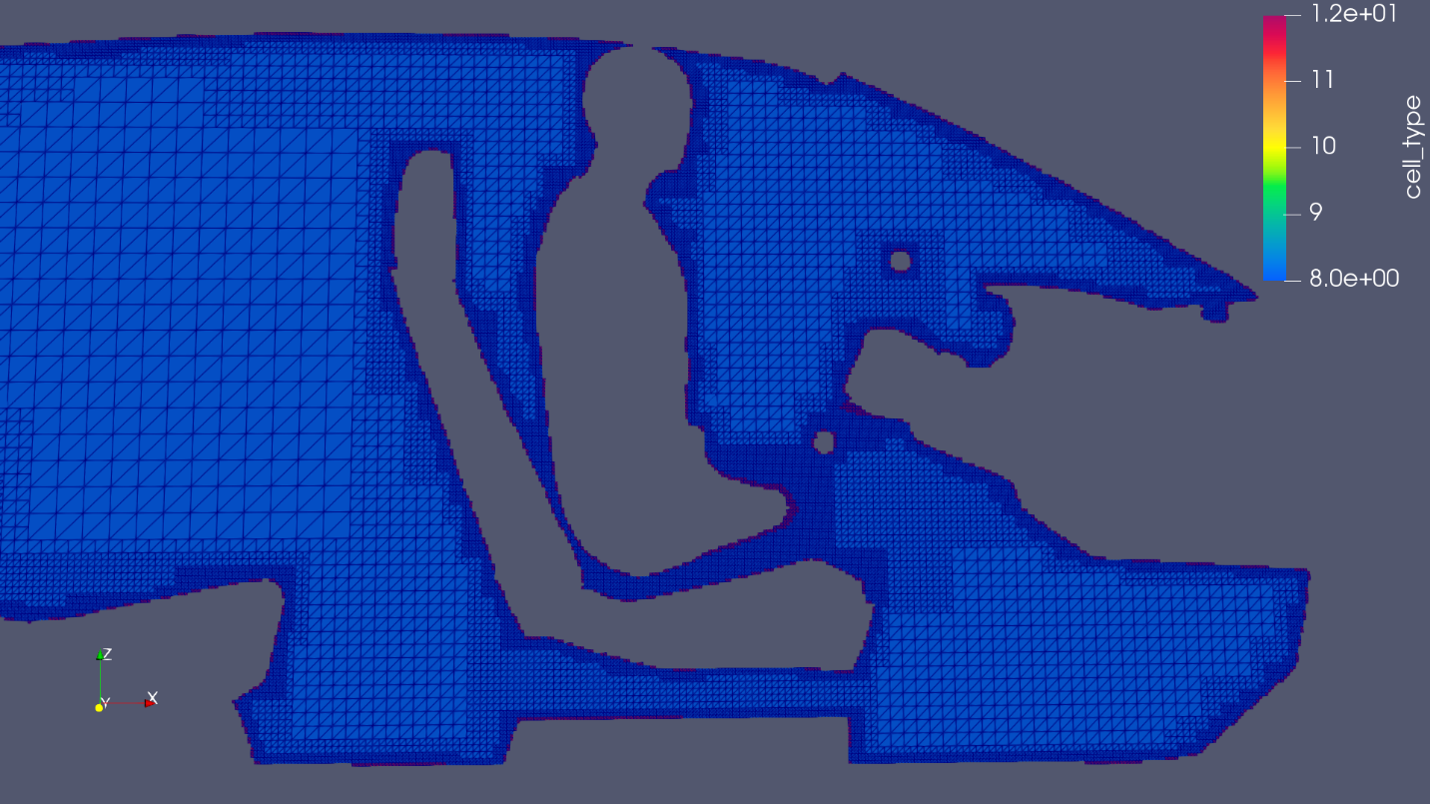
- Multi-level meshing. RapidFlow’s Cartesian solver now refines the mesh near boundaries while keeping coarse cells in open regions. It works with all RapidFlow physics capabilities, and in benchmark testing it matched uniform-mesh resolution with a fraction of the cells while solving more than 20 times faster. The Cartesian domain with multi-level meshing now replaces the deprecated Octree domain type.
- AMReX plotfile results. RapidFlow can now write results in the AMReX plotfile format, in addition to or instead of EnSight Gold. The plotfile format can improve performance for high-resolution meshes, and all results files now go into their own subdirectory.
- Inlet direction normal to the surface. Inlet direction can now be set normal to the inlet surface instead of entering a direction vector by hand.
Platform and Automation
- Shared memory parallel on Windows. The Multi-Grid solver now runs in shared and hybrid parallel on Windows. These options were previously available only on Linux. You can now parallelize features not yet available in distributed parallel, including moisture transport, phase change materials, faceted terrains, and the advanced radiation boundary conditions used for ManikinPC coupling.
- More command-line control. Thermal probes can now be imported and exported with results as CSV files from the command line. CFD convection records export to CSV in a format ready to re-import or map as a new record, and results can export to texture maps without opening the GUI.
Also in this release: a new Liquid Area Density result type, generation conditions recorded in the Berkeley Setpoints file, and TDFIO access for creating and modifying exhaust stream parts.
Comments
0 comments
Article is closed for comments.